Showing posts with label culture. Show all posts

Sunday, August 16, 2009

Hooch

In early July, riots erupted in the Indian state of Gujarat after more than 150 people were killed by poisonous methanol. The victims had purchased illegal bootleg liquor sold by a local retailer named Harishankar Kahar whom new the 700 liters of brew contained a whopping 48% methanol (drinking 0.0015 liters of methanol can cause blindness). Incidents such as the July Ahmedabad hooch tragedy are common in India as most of the marginally and extreme poor cannot afford legally brewed alcohol.

There is a gigantic hooch trade in India, as government regulation and taxes on the legit alcohol industry are perverse. The sale of cheap, potent, sometimes-methanol-containing homebrew is a profitable trade- sometimes even for local politicians and police who are paid to forget the strict Indian hooch laws (Gujarat, for example, is actually a dry state prohibiting ALL alcohol sales.)

Our NGO, IDEX, works in many villages throughout Rajasthan. Some deal with such harsh, object poverty (think child malnutrition/starvation), that IDEX does not send its young foreign volunteers to see them. Our village is not one of these. Some of our families own motorcycles, some own livestock, one even has satellite TV! Chandyi Kheryi is by no measure posh, but it is my opinion that the residents owe thanks for many of their better living standards to the illegal liquor trade.

One of the things said to be 'keeping the Kanjar down' is the negative stigma that comes from their brewing of moonshine. I don't quite understand this as it seems to me that a number of regular Jhalrapatans and even local law enforcement are regular customers of the Kanjar brew (buying only at night, of course).

Before I go on here, let me say this: I know neoliberalism isn't perfect; if I took anything with me from my anthropology classes out to India it was a constant second guessing of the whole "we have to save these people from their current lifestyles" mision. I mean, is it possible that slum dwellers and the tradition-ridden rural poor are actually quite happy with their situations (or at least content)? Perhaps the best course of action to be taken isn't one of development and seeking to raise income education levels... but that's another post. For now, I'll just put on my economist hat and assume that developing the rural poor's markets and 'living standards' is the best thing Westerners (or at least young idealists) can strive.

So here's my question for IDEX and the residents of Chandi Kehri: Why not join the country liquor industry? The twenty or so legal Indian alcohol manufacturers currently sell 200 million cases a year, pulling in a huge chunk of change for the wet states which license and heavily tax them. Now I know it's not all that simple (remember that negative social stigma with alcohol makers? not to mention the whole caste system thing making it nearly impossible for a Kanjar to land a janitorial job, let alone a major manufacturing license for a so called poisonous industry; but again, this is the econ talking in me, not the anthro).


^I wouldn't recommend entering the restaurant business to the Kanjar. It's not that it's a notoriously tough gig, but that Joney's Cafe in Agra makes food too good to beat (he even cooks kimchi!)

Other small enterprise ideas I've floated for the Kanjar include operating tuktuks (easy market to enter, but little profit power there); running a bus (harder market to enter and find a niche route in, but more potential revenue here); and, my favorite, running public pools (think about it! I've seen loads of kids playing around big mud puddles but NO pools. Probably have to work around the whole women showing skin and most people not knowing how to swim issues but after figuring those out, it'd be a gold mine maybe).

Of course, the biggest issue with a public pool would be the extreme water shortages in Rajasthan. Though here too is a story for another post.


^The possibilities for private transportation are endless in India!


^Is striving for unbelieveable riches always the best path? Probably not (my humble midwestern roots tell me money ain't everything), but generating enough wealth to send your kids to school seems like a noble enough goal. Therefore, I encourage the marginally and extreme poor to create enterprises.

Example: Manufacturing disposable bowls for sale to street vendors. Filling a market need with a biodegradable and cheap product? Absolutely brilliant!! More on these genius little business ideas this winter...


See: "Poisonous Mix." Times of India, July 14

Sunday, August 9, 2009

Just Do It


Where are all the Indian flags? Is it odd that I only caught sight of one the sixth week I was here or is it odder that I live in a country whose stars and stripes proudly stand guard outside of even Burger Kings and so I find a flag-shortaged country alien? While India has taught me a lot about America, it has also confused me on ideas like humanity.

I’m getting ahead of myself. Let me explain, as usual, with some amusing sights and scenes and then we’ll come back to the mumbo jumbo (at which point, you can tune out and just look at the pictures. I won’t mind; really).

Amusing sights.. let’s see…
Well there’s the fact that men here aged 14-29 tend to wear almost exclusively, even in the solar flare called Rajasthan, tightly fitting embroidered jeans. Could be just another Western inspired trend similar to the wealthy people in Jaipur fashionably eating at the Pizza King and McDonalds (which could be a manifestation of modern day self-inflicted cultural colonialism.. but again, the BS will be dug at only later so be patient). The top two funny-in-an-unsettling-sort-of-way embroidered jeans I’ve seen were both spotted by Rick while we were on buses and both featured embroidered ass pockets (the general area of which is frequently and uncomfortably close to eye level while riding the buses here.) One of them said, in swirly fancy golden letters, “ERECTION” on the right cheek and the other memorable pair read “Torture,” also on the money maker. I’m not sure how in tight and embroidered jeans currently are in America, but I know erection jeans and rear torture are always funny things to joke about.

The daycare across the street, numerous kid products (like the blackboard packages given to our kids), and the odd passing tuktuk features painted-on pictures of Mickey Mouse. Sometimes Mickey is even joined by an alternate-universe-Daisy, or a slightly-disproportionate-Goofy, and sometimes he’s even painted actual Mickey Mouse colors! (And sometimes he’s yellow.)


I’ve already typed about the importance of the Michael Jackson type, dancing (and on a grand scale, too) maestro, supposedly inspirational, ‘white’ character of celebrity; but in that same picture of the fake Michel Jackson backpack there’s also a fake Tom and Jery bag and next to it a fake Adidas one. Now while I’ve gotten somewhat over the initial ‘wow, just like in national geographic!’ factor of seeing rural women walking around with heavy things eloquently balanced on their heads; and I know fake name brands are everywhere in the world (yes, even in Iowa – Skeechrs, anyone?) but it never fails to strike me as odd whenever I see an elderly woman in traditional garb walking with a fake Nike duffel bag full of vegetables on her noggin.

Also: the swastika. No, it hasn't been appropriated here as it is used at home (Mickey Mouse means happiness to our children so the swastika should mean racism for your antisemitists too!) Quite the opposite, it is the West who ‘stole’ the symbol and so we should be the ones at the erection jeans butt of the jokes on misused signs. Far from its more sinister Western associations, the symbol here is one of religious calm. Peace, unity (ahem- which is why it was chosen by the aforementioned hate group), shanti, health: the ‘swastika’ (sorry I don’t know the actual name for it) is everywhere here, I can see at least two from where I’m sitting right now. It’s a shame I don’t have many Nazi friends because there is no shortage of cheap gift souvenirs here they’d go sahmayachhh for. Of course, I’d never tell them the ‘original’ meaning of the hateful tattoo they’d adorned their upper arm/chest/forehead with just as I’d never tell an Indian that Erection jeans are soo 2008. To each his own, I suppose.

And while we’re on the culture train, one more thing I’d like to slip in here before wrapping up would be marriage. Sohan, our camp manager, was married at age 10. Some students who’ve tied the knot: Raju, age 12, Chansingh, age 11, Maya, age 9, and Sunita, age 7 or so and who I actually remember noting as ‘one of the younger ones’ in my first in class written observations. Gopal, another IDEX guy who’d spent some time with us here in Patan, was married five months ago when he was 22. It’s becoming more common to put off marriage til the late teens/early twenties, but parental control is still the name of the game in the overwhelming number of weddings. For Gopal, that meant a light conversation one day that he’d be getting married the following weekend (for the record, “thanks mom and dad!” was not his response.)

Love marriages are on the rise, and I can’t help thinking that that’s only another sign of Western cultural influence. Could it be that the Bollywood stars imitating in quote and behavior the antics of Hollywood stars (the details on which are always explicitly covered on Page 2 of the Times of India) has in turn spurred the youth of India to act like the celeb loving youth of America? The simple explanations are that things like Mickey Mouse are universal symbols of childhood happiness that can be readily accepted worldwide and that the borrowed symbols offered in blue jeans and swastikas are basic examples of one culture taking in another’s flag and using it as a curtain. The cynical explanation is that true cultural hybridization/borrowing is a myth; that colonialism has today been replaced with cultural hegemony; and that the West now calls imperialism development of new markets.

I toy with each idea, those of an anticapitalist anthropologist and a culturally respectful economist. While the funnily inappropriate uses of borrowed images and societal themes are fun to point out, the bitter aftertaste of colonialism and the general history of cultural hegemony make me wary to congratulate the Indian who marries for love, eats Pizza Hut, and wears jeans.

The good news is that the sheer differences of views, especially on things we normally hold near and dear to our hearts (arranged marriage, name brands, crime, class, homosexuality, the armed forces, religion, etc.), have led me to accept that today’s mixing of cultures is probably not a sign of total domination of one by another. The bad news is that that still doesn’t explain why people would become angered up to violence on matters of gender rights, corporations, being gay (which is illegal in India, by the way), the military, and faith. Eh, I’ve got another week here; maybe the answer will come to me by then.

Monday, August 3, 2009

Black or White?


The two boys living in the house across the alley are the friendliest people I’ve met in India. They will wait outside on their stoop until I walk outside, just to be able to say hello. On one of the first times we ever chatted, the older of the two (about eight or so) brought me a pen and a one page hand written survey. The questions on it were all the typical questions asked by any Indian making friendly conversation (“What is your name? What is your fathers name? Which country? Which village? What are your hobbies?”) and concluded with an exclamatory remark: “INDIA IS THE BEST AMERICA.” I’m not sure if this was supposed to be a threat, compliment, or assertive question, but I took it as friendly and we’ve been cricket mates ever since.

On one occasion, they invited me to their home to take some sibling pictures (their idea, not mine). They also tried to talk their mother or aunt or something into joining but she wouldn’t give in to their demands. One of their elderly women relatives (the extended family lives under one roof) kept making jokes to me and laughing. Camera shy relatives, yippy kid siblings, and a crazy aunt. Being twelve time zones away from my own family but making up for it somewhat by finding myself in the warm company of this one made for a nice afternoon.

Also, my neighbors are Muslims. I’ve been thinking hard, but I believe they’re the first I’ve ever met. Not that it’s all too surprising; ‘Muslims and Hindus are each brothers of mother India,’ as Ben Kingsley reminds us in Ghandi, but it’s probably more surprising that I can’t think of anyone else I know who follows the world’s second biggest religion.

They say India is the World’s Most Multi-Dimensional nation. In a land where 99.9% of the population would probably be considered ‘some sort of brown one’ by American standards, that diversity seems to stem from places other than race.

Religion would be one of those areas. Muslims are Sunnis and Muslims are Shiite. Hindus are Jain or Sikh or one of dozens of others. Christians come in all the familiar flavors. And while there are multi millennial old Buddhist ruins around here, I think they’re more predominant in the south.

Visiting the lakeside park and serene herbal garden in Patan, we once stumbled upon a big pink temple that was built before George Washington was a general. A large man then invited us to stay for the Hindu service that was scheduled to begin in a few minutes. He proudly proclaimed himself a member of the high status Brahmin caste and asked us our caste. At first, I thought he was joking. Once I realized he was serious and we explained that our country didn’t have castes, I could only sit and pretend he was joking. As more respectable looking Hindus filed in and sat on the marble floor (it was a very nice temple, maybe only high status folk can attend?), I wondered what privileges our host had inherited through birth, how he had probably lived his whole life justifying these birth rights with the caste system, and what he’d think of a society sans caste like the US. What would he think if that society told him the caste system was barbaric and should be abolished? Would it be fair to him for us to do that? (We do.) He’s only living his life the way his heritage has for millennia (one of privilege), but would it be fair to the Kanjar not to end that? There are over three thousand castes in India. That’s diversity.

The service consisted of lots of chants and clapping, a door that would open to reveal a golden statue and a guy who would hit a gong to the beat of the chanting, people bowing, a passing around of little tea leaves to eat, and hand movements coordinated with more bowing and eating of tea leaves. Everyone remained standing for the entire service. We then cleared out of the marble floored room and walked to the front courtyard of the temple, where we entered another room filled with bright tinted sunlight. Everyone began chanting again and then doors at the front of the room opened to reveal another big shrine thing and the same guy hitting a gong again. An automated drum machine was turned on and we repeated the whole ritual.

As a kid in weekly Wednesday night Sunday school, we were told that “Thou Shalt not Worship False Idols” meant that we shouldn’t pine over things like video games and new TV’s or bikes or (and this one was emphasized) Pokemon cards. In India, I finally see a truer picture of what the Bible was alluding to because there are A LOT of idols here for worship. In dug out portions of little retail store exteriors, makeshift alters street side, along the ends of the city walls, or just randomly painted things with rocks placed next to them, Hindu shrines are everywhere. Most aren’t as elaborate or impressive as the ones in the fancy Patan temple, but simply rocks carved into round stalactite like shapes and painted orange and covered with foil. I think praying to these in the morning and occasionally giving one of the larger ones an offering is a regular ritual for most. And while I don’t understand what about all this turned the early authors of the Bible off, I really don’t understand or comprehend the idols thing at all.


My favorite temple experience would have been visiting the hilltop fortress here in Patan on a rainy afternoon. Once there, it began to downpour and I was invited to sit on the steps of the elaborate (and somewhat gaudy) temple that had been erected within the decaying fort walls’ courtyard. I sat watching the rain and passing stray dogs with the plump fifty something Indian woman who’d been selling incense at a table before the storm. Not knowing each other’s languages, we just sat under the blaring speakers that had been installed on the foil-mirror plastered ceiling of the temple awning. In a scene that might be from a Wes Anderson flick, we shared coconut and sugar rocks while the awfully high pitched voices of the Hindi women singers drowned out the sound of the rain and the temple guru (who was shouting at his cell phone while sitting cross legged at a shrine inside.)


That fort had been built during the time when the Mughal, Rajput, and Muslim empires were continuously jockeying for control of north western India; conquering land, erecting great structures (the Taj, for example), and then losing the land to a rival empire who’d repeat the process. I think about the long histories of the things around me a lot in India, and the strange situations those things find themselves in contemporary times. How many invading soldiers had been speared off where the loud speaker control panel was now installed? Did the priest who charged his cell behind the Ganesh alter have ancestors who’d toiled under the hot sun to finish the Maharaja’s fort? What does INDIA IS THE BEST AMERICA really mean, anyways?

Saturday, July 25, 2009

They don't call it WORLD Wrestling Entertainment for nothing


Finished up the Jaipur weekend by waking up early Sunday morning and hailing myself a private bicycle rickashaw. As the Nike shop was closed, I decided to go back to the historic old city/bazaar area (which my friendly driver happily accepted for twenty rupees, I think he was happy to have scooped up the only tourist that was awake and out in Jaipur at that hour). He took me the entire length of the path we’d walked the day before, and at under fifty cents, I’d say it was well worth it. Not a bad deal for the bike guy either – only having to cart around one tourist, weighing less than 150lbs.

During our makeshift tour, I basically read off all the Indian names of the sights I hadn’t seen from my map and he’d take me there as soon as he could mentally decode my seemingly horrible accent ("Can you go now to the jaemah mass jheed?" ...thirty second pause as I repeat and repeat..."oh jaemah mass jheed, yes yes") and wait while I took pictures and struggled to bargain with shop keepers. It was a good arrangement, and he even let me pay him whatever I felt by the time we’d gotten back to Evergreen. This gave me a fantastic (and still unimplemented at time of posting) idea to hire three separate bicycle rickashaws and have each of the three members of our group get carted off to some far off destination, promising to pay the first peddler to arrive quadruple fare ($2?) and the losers a normal fare plus a few rupees for the effort.

My other Jaipur inspired transportation game idea involves the mob of tuktuk drivers which inevitably forms whenever a traveler shows he’s interested in taking one (and sometimes even when he isn’t). I’d need a translator to explain it, but I would begin calling out progressively larger prices, staring around 10 rupees, until the first driver accepts the current floor offer. None of the other driver’s would earn fare if they were under bid by one of their comrades and I would call the auction off after reaching a certain unannounced reservation price and everyone would lose out on the fare. I know tuktuk drivers make well below $5 a day, but it never fails to insult when one tries to scam you by saying a certain ride will cost nine or ten times you know what its worth. It may only be a few quarters you’re getting schemed out of, but those rupees seem to add up quickly, especially when you spend a weekend in Jaipur. It’s the principle of the matter, isn’t it?


We ate lunch at a chic restaurant overlooking one of the main streets (meal at a nice restaurant in the city: US$2) and met three British girls outside of the Jaipur zoo. We collectively decided to avoid the zoo and its Rs. 90 foreigner entry fee (locals Rs. 5), and instead sat out in a park next to the gigantic Prince Albert Museum. Needless to say, a large crowd slowly assembled around us and passersby on the sidewalk would climb up onto the park fence and gawk in at our extraordinarily average conversation. We had become a zoo exhibit outside of the zoo. We talked a bit about England and the states and the novelties of India (the stares, the sneaky taking of photos, the wondering how we were so interesting) as people kept focus on us, snuck camera phone pics, and beggars and families and normal park goers alike slowly surrounded us in quite amazement. And it’s not like Jaipur is even that detached from the West; its basically India’s preeminent tourist city. We took a tiny horse drawn carriage the half mile or so to McDonalds for dinner.


Before heading back to Jhalrapatan, we had a few Kingfishers at an Indian bar. Like all bars here, they are very discrete – no large neon signs on the outside. The customers, it goes without saying, are all male. There’s usually some cricket playing on TV, but as the West Indies vs India match was under rain delay, good ol American Pro Wrestling was on instead. In addition to sitting next to an old man on a rickety carriage who fed our one horse power engine some grass after taking us to McDonalds, I think I’ll file watching WWE in a dark and quiet Indian bar under my memory’s ‘Only in India’ moments.

We got back to the house early Monday morning and practically reset off for class the minute we entered the door, allowing just enough time to fill our water bottles. During the next week of IDEX class, the older kids would be introduced to ‘Around the World’ and two team do-a-math-problem-on-the-board races and whatever other activities we could remember from our old elementary days.

While Magnus departed our camp to go back to the mountainous north, where the weather is cooler and the hash cheaper, and Rick fell ill midweek, leaving me to entertain the kids alone, I learned via email that the combination of slowly cashed checks and using my card in Jaipur a grand total of one time had conspired to cause me to overdraw my checking account for the second time this year. Finding myself insolvent for the third summer in a row, I believe I’d hit the low point of my time in India, and yet I really didn’t feel a grain of anxiety. I should probably put here that I was relaxed because during my time abroad, I’d truly found myself and had connected enough with my person to not be concerned with petty everyday issues which would have formerly wrecked me. Or perhaps I could say I’d adopted a more Eastern outlook on life after realizing the hollow pageantry my life in the West had centered upon and wasn’t phased by a few mere setbacks of that self. But really I just felt like my bank was half a world away and I wasn’t in dire need of money anyways and I’d actually taken a liking to the crippling isolation I’d been able to find in India (for the first time since first starting at Iowa and not really knowing anyone.) Not that crippling isolation’s necessarily a good thing, but it’s always good for the old soul to get some quiet in every now and then and probably the reason I came to India. And as far as that goes, what a good vacation it has been.

^Another scene I'd only until recently seen in history books. Did I mention Chandya Kheri reminds me of old time Iowa? There was one modern John Deere store in Bundi (John Deere who, if I remember correctly, got his start by selling innovative new plows like the one above) and I saw John Cena of the WWE wearing colors and clothing alluding to the Deere brand during one of the televised Monday Night Raw programs here. So it's not that different after all.

Thursday, July 23, 2009

My favorite Bollywood Music Videos

The dancing! Holy shit the dancing. Did Grease have a forty actor choreographed mid-badminton-match dance-while-hitting-birdies-in-tune number? Nah, only in Bollywood. Skip to about two minutes into this one for the best parts.


A love song.. as far as I can tell.


One of the great Bollywood idols Shah Khan's songs from Om Shanti Om, the same movie as the first video. In case you forgot, Shah Rukh Khan is the Bollywood star who won the government's "Best Indian Citizen Award." Yes that award exists and yes that makes 'King Khan' literally one in a billion. The translated chorus is "My heart is full of the pain of disco / the pain of disco!" I think it's a self parody of Bollywood but that's only cause it's pretty ridiculous itself. This is kinda what I had in mind when talking about some sort of national frustrated sexual tension expressing itself in Indian media, but that doesn't mean it's not an awesome music video!


Same girl as in Om Shanti Om (Deepika Padukone), but I think this one was a box office flop. Skip to like 28 seconds in for the actual start; sorry about the poor quality, best I could find.


Did I mention that Michael Jackson's death saturated the news networks and papers here for weeks (and still appears about every other day in the Jaipur based Times of India)? I know for a fact that he was/is very popular in India and I guess with all the great celebrities here being amazing dancers, you can probably guess why. Whenever I say I'm from the states, about two in three people will say "ah, Michael Jackson!" And I will acknowledge that he was my countryman and agree (while holding in a smile) whenever they console me of his death ("yes yes before death some weeks... great tragedy"). Rick and I saw a cheap souvenier backpack hanging in the shop of some Pushkar current events capatalist with "Micael Jackson" badly printed on the front... too soon?

Monday, July 20, 2009

Read all about it

I read four good books during my first three weeks in India.

Fast Food Nation
Eric Schlosser


Quick Review: Another hard hitting but insightful investigative journalism work by Eric Schlosser (see also: Reefer Madness). In true Schlosser fashion, the book takes hard swipes at the mistreatment of immirgrant workers, antiunion habits of corporations, powerful lobbiest groups (here the big Meatpacking companies), and the commodification and over reliance on technology supposedly running rampant in today's America. The book ends with only weak suggestions for solutions and a somewhat hypercritical afterword, but the heart of the book is grade A.

Relation to Iowa: Alot of the horror stories of meat packers and slaughter houses gone wrong come straight out of Iowa. Council Bluffs and Denison are both mentioned (one CB worker died falling into a renderer/grinder and a Denison guy lost his arm -if I can remember correctly?)

Relation to India: I've had maybe five meals with meat since landing in Delhi a month ago, three of those were at the Jaipur McDonalds. Even though I finished the book the weekend we were in Jaipur, even though I was fully repulsed by how embedded most Americans' fast food addiction has become, and even though the true scope of how un-foodlike modern fast and junk food has become, I STILL, without hesitation, ate three of my five meals in Jaipur at McDonalds, the only one I've seen while in India. While mulling over how industrial (Schlosser would say unnatural) and fake our food has become (artificial and natural flavors are simple lab chemicals that give food its flavor- in everything!), it helps to be on a steady diet of fresh veg Indian food. Really can't wait to get back to burgers in August.


Einstein
Walter Isaacson


Quick Review: The first big real biography I've ever fully read and a good un for sure. Isaacson paints an interesting picture of an interesting man: a person with a mind good for both revolutionizing science and helping to escape the lifey troubles all people have to cope, a man who embraced his celebrity and cared for all of humanity but was distant to those meant to be closest to him. Smoothly glides between biography, science writing, and narrative to create a great read about a guy you only wish you could've met.

Relation to Iowa: Book mentions Iowa City when talking about one of Einstein's travels through the states while looking for a job.

Relation to India: I'd like to think that, at least while in India, I've taken up some of Einsteins personal fashion methods. In his latter years, the aloof nature of his mismatched clothes helped reemphasize his whole absent minded professor-ness and some believe that without his famously unkept hair, he never would have reached the level of celebrity he did. As I planned to do laundry only once this trip (you have to hand wash everything), I've had to get creative with my outfit selection these last few weeks. And who knows? With everyone here trying to dress Western, maybe I'll start a new trend by going around in my brightly colored tees and maroon athletic shorts. (Actual quote: "Your fashion, it is looking the best. Yes.") I've worn my swimming suit out and about on multiple occasions and haven't gotten a haircut in three months; though I'll probably take up one of the street barbers' Rs.30 ($0.66) offers soon.


The Undercover Economist
by Tim Hartford


Quick Review: A quick pop econ book that covers about 70% of econ 101's most basic fundamentals and manages to use nearly 0% of the associated jargon. Pretty good everyday illustrations of a wide variety of concepts. The book goes along with us as we buy overpriced coffee from a stand, search for good prices at the supermarket, and surf the web on our phones.

Relation to Iowa: "There are two ways we can make cars in America. We can build them in Detroit or grow them in Iowa... in Iowa we simply water corn seeds and harvest a crop, load it onto an ocean vessel and send it out into the sea. It will return to us as cars using an amazing corn-to-cars technology called Japan." The book uses the state in any example involving agriculture. Yay Iowa!

Relation to India: Has some interesting stories about traveling to the Cameroon. Has some typical ideas about spurring development in places like Cameroon. Tells a very rich story about China's historic economic turn around. Good lessons on both stagnant growth and rapidly developing nations which can be applied (and seen) right here in India.


We Wish to Inform You That Tomorrow We Will be Killed With Our Families
by Peter Gourevitch


Quick Review: The saddest story I've ever read, but probably only because it all actually happened. Peter Gourevitch's recounted survivor stories from post-genocide Rwanda tell of a country desolated by harsh colonial rule followed by harsh dictatorships and rocked by an ethnic slaughter resulting in about an eighth of the population being killed, most commonly by way of machette. The book gives a reliable account of the history, before and after colonialization, of Rwanda and the more recent events preceding the 1994 Tutsi genocide. Gourevitch remains objective when berating the international aid networks and organizations (for ignoring the details of the situation and accidentally giving aid for years after the genocide to the killers and political leaders responsible) and the so called developed world, which vowed after WWII to never again let an ethnicity be cleansed, (for turning a blind eye during and after the genocide). The author is superbly introspective, especially when interrpreting the accounts of his informants. There is more to this tragic story than I can do justice explaining here, so just Wikipedia it or get the book.

Relation to Iowa: Only book that doesn't really mention Iowa. Not even once, go figure.

Relation to India: When Peter Gourevitch writes on the intricacies of visiting Rwanda, a nation with visible ties to its colonial past and a great many seriously impoverished people, I feel like he is writing about India. Almost. Although India has a somewhat corrupt police force and its people (at least outside of Mumbai and Goa) often act as if in awe when spotting a foreigner, there isn't really any remaining signs of India's inner country post colonial struggles (Pakistani partition in 1947 turned those into good old fashioned international hostilities). Also unlike in India, Rwanda suffers a dearth of foreign investment and economic growth, whereas Indians become gloomy when news spreads that their economy may only grow by six or seven percent this year due to the recession (taken into the context of human history anything over five can be considered extraordinary). Reading We Wish to Inform You.. makes it sound as if there is another planet I've yet to see: not just the (1)cozy or (2)growing, but the third. Better reserve the gonetorwanda-brb.blogspot.com url now just in case.

Thursday, July 16, 2009

Kanjar

Thousands of years before the arrival of the British, the lush Indian subcontinent provided the setting for the independent discovery of agriculture and the birth of Indian civilization. Hinduism was founded, the caste system was implemented, and a culture was created. It is unclear (to me at least) whom predates whom, but a nomadic foraging sub group society, today known as the Kanjar, coexisted alongside and within this early India.

The Kanjar, existing outside of the rigid caste system subscribed to by greater Indian society, maintained their nomadic traditions well into the twentieth century. Precolonialism, their interaction with mainstream Indian society mainly consisted of part time work as entertainers and performers. With the strengthening of British influence in the mid 1700's, a bevy of modernization and imperialistic exploitation projects began slowly destroying the jungles and forests the foraging Kanjars depended. Taking action, the Kanjar resorted to rebellion and crime against their foreign guests; though again, it is not clear as to what direct total affect the British had on the decision to turn towards crime and what affect being generally outcast in an increasingly British-like India had.

In either case, the British criminalized by decree the entire Kanjar clan in 1857. Three years later, the Kanjar were scheduled by name under the British Criminal Tribe Act. An apparent attempt into pushing the various pesky tribes around India into shaping up, the 1860 Act had the rather unfortunate unintended consequence of forever stigmatizing the Kanjar within India; synonomizing even today their very tribal identity with criminal or felonious or immoral. It is the descendants of these eternally shamed persons whom I have the responsibility to teach the ABC's and 123's over the summer.

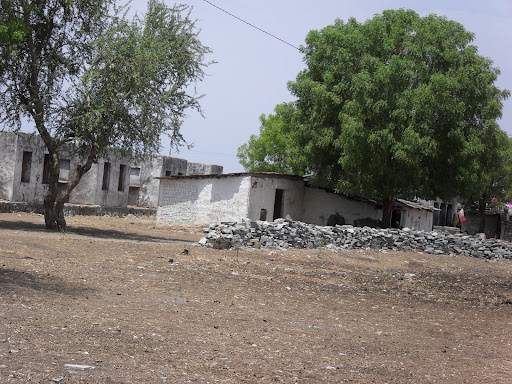
Our first day in Jhalrapatan was reserved for visiting two Kanjar villages and the schools we could choose to teach. The villages are similar to the ones seen on late night Christian infomercials urging viewers to 'save the lives of these children, for under a dollar a day'. Each village consists of around 80 people, ~30 of them school aged children (though education is by no means a priority); and a few dry (unirrigated) farm plots surrounding a few dozen brick rock homes. The houses are the families' bedrooms and living rooms, filled with little more than a few pots and beds. There are no evangelists or infomercial camera crews in either village.

As India's population ballooned after its 1947 independence from Britain (kudos, Gandhi) and land became an asset, the Kanjar were forced to end their nomadic ways and settle on government owned reservations. The Kanjar of today (popularly known under the umbrella term 'Untouchables' in the West) are a marginalized people, heavily discriminated against by law enforcement. Their remote locations offer isolation from the often corrupt police force, but (coupled with an understandable aversion to the authority of the state) also removes them from many mainstream government services. India is the world's largest democracy, but the Kanjar have no political lobby to protect their interests and are usually a minority even within their own districts (remember that the UNICEF Kanjar programs were abolished a few years ago to rid the state minister the shame of having aid programs in Rajasthan under her tenure) and so carry little political weight.


That doesn't mean they are desperately poor and suffering, however. On our tours, I counted many motorcycles parked next to brush or rock piles, at least one satellite TV, and heard music from a variety of cell phone and stereo speakers. I believe each resident is entitled to some form of annual government welfare, but I can never get a straight answer as to how much, or if any, is handed out. The other main sources of income for the Kanjar include 'selling' their daughters into marriage (a practice translated by the IDEX staff into the not-quite-correct-sounding "prostitution") and illegally brewing an alcoholic drank for retail out of berries (more on this later).

All in all, the villages were not in as desperate shape as I'd imagined, though certainly not a place high on the property ladder. With their one room school houses, the nonchalant attitude towards education (especially when it gets in the way of cooking or farming duties), the use of homemade booze, the conservative approach to women's rights, and their interesting farming techs (I had only seen ox drawn plows in museums before), the villages always seem to remind me of predepression Iowa. The high rates of alcoholism and welfare dependence, general state of their isolated government property communities, and low formal employment masquerading greater discrimination and a long history of marginalization make the Kanjar communities a slightly familiar but altogether different kind of Indian reservation than I'm used to.

Camp Jhalrapatan and TV India

We took a Bolero (imitation land rover) from the train station to our house. The ~30km (18 mile) journey took about half an hour due to narrowness of the highway, congestion, lack of street lights, animals and people walking on the streets, and it being generally difficult to navigate a large vehicle through cramped Indian cities at any time, let alone during the busy and dark night shopping period. Along the way and throughout many of the smaller cities scattered along the Rajasthani highways, large crowds of people could be seen gathering around single 22" TVs - what these groups tune into en masse I can only guess.


We reached our house at around 10pm, where our in house cook, translator, guide, and soon to be teaching assistant, Saroji had a large hot dinner waiting. A mother of two (who refused to marry her daughters off until after they had completed a full education), Saroji is self described 'brave woman' -- meaning she is more independent than your average forty something Rajasthani woman ("but not as wishful to be independent as your women of the West"). Accompanying us everyday to class, occasionally team teaching in our village, she never hesitates to bargain or defend on our behalf. As we passed through our front yard gate that first night, Saroji was there to greet us and adorn a traditional red paint dot on our foreheads (which normally signifies marriage but forehead marking can be symbolic for a great variety of other things; perhaps ours was a sort of welcoming wish). Sohan looked visibly happy to be settled back at camp Jhalrapatan.

Saroji's cooking is perhaps the single greatest discovery I've made while in India. Using only fresh ingredients (and you can't get much fresher than locally bought vegetables grown on locally owned and dry-farmed family agro plots), her dinner entrees usually consist of potatoes or okra or ladyfingers covered in various Indian (curry) spices and oils, served aside butter flavored white rice (usually with potatoes or tomatoes), cut fresh vegetables, and a bean and spices soup or two. And with chapati (or naan, but I prefer to call them tortillas). Always with chapati. A lot of it.

Breakfasts are usually some mix of bananas, toast, hard boiled eggs, or japarti stuffed with either potatoes or simply more japarti dough. Meat is never a part of the equation, though she does fry a delicious mixture of vegetables and uniquely savory dough into bite sized morsels with the texture and look of chicken strips. Cheese is a rarity but milk and plain yogurt are not. Soda is relatively expensive (which is to say pop here is priced on par with Walmart back home) and fruit juice is downright extortionate (along with toilet paper, artificial and fruit juices are strangely 'overpriced' -- probably due to some mixture of low demand/low production possibility?) but the food is usually flavorful enough that an old fashioned glass of filtered water is well enough for most days' in-meal beverage.

The house is not air conditioned, instead relying on ceiling and stand fans. Our room does have a water cooler, a sort of humidifyier that uses only cold water and a very big and noisy fan (it says "Snow Cool" on its side), which we're told is actually more effective here than air conditioning. It spends most nights unused because it causes too much cold water to condense on our sheets. There are two lounge spaces with great views on the third story. At night, it provides the best escape from the heat the house traps in its rooms during the day. The view is great and you can often see the celebratory Christmas lights hanging on far off houses (marking a family wedding) or hear Hindi DJs drop beats in the streets for neighborhood dance parties.


We have a high speed internet connection here too which I use to write retroactively on this blog and stay up to date on Facebook (because knowing that the new Harry Potter was 'SUUch a waste of my time' or 'AHHH bestie movie ever' is essential to living a fully satisfied life in India). And while the power (and sometimes water) is shotty, especially during storms and the hottest part of the day, we also have a TV with +70 cable channels.

While tradition still tells women it is inappropriate to show their bare shoulders in public, Indian TV tells us the best way to get the ladies to rip off their clothes is to use Axe. Commercials often fall into one of three categories: actual American commercials (sometimes redubbed in Hindi; ex. Axe, Garnier Fructis), Indian commercials for American products, or Indian commercials for Indian products but with a distintively American marketing flair (ex. Axe imitators which still carry on the typical body spray ad script; see: 'Set Wet' spray -actual heavily advertised product). Ads for condoms and birth control occasionally dawn the small screen (though never in actual daily conversation), and the music, reality, and soap channels always feature the sort of not-so-subtly sexed up styles and motifs normally reserved in the states for the Spanish language stations.

Before coming to India, I never thought the opinions of the nut jobs outcrying that immoral media ruins societies were worth much. But in a society that is adopting an appreciation for tooth brushing and TV concurrently, I'm having second thoughts. I'm not saying that no citizen outside of the G8 can grasp an appreciation of pop TV for what it realistically is, pure entertainment; yet there's no question that the current presence of the kind of popular Indian media that I'm talking about (see: last paragraph) will affect the future mindset of its people differently than the rise of similar popular entertainment forms affected the US in the last twenty/thirty years.

The result, which is already beginning to unravel -- as in the case of Bollywood, will be a national attitude towards its pop culture that will seem to an American vaguely familiar and yet totally strange. An example is the way the Japanese regard their video games or cartoons: both forms of entertainment arose at the same time as their US contemporaries, but the different national and cultural environments the two grew up in resulted in largely varied views of what is acceptable and normal within each (Americans tire quickly of cutesy Japanese characters and become confused with common anime conventions, Japanese largely view American story lines and styles blunt and overly unambiguous).

An India-relevant example would be the road/driving system: its a very typical cultural hallmark within America, but when viewing the Indian way it seems hectic and otherworldly (and dangerous). The difference, obviously, is how the car and modern road system were basically invented and gradually integrated into American life, while India's need for cars came later and quite abruptly post-independence. Only certain aspects of the overseas systems were appropriated while new conventions were invented; the resulting beauty (or terror) can be seen on every Indian road and within any Indian tuktuk driver's methods. You can easily define it as cultural hybridization, localization, or neoglobalism - but deciding whether it is a good or bad thing is a bit trickier.

All I know is that fifteen years ago it was legal here to set your wife on fire if you did so in your house and there was a legitimate reason (you wanted to). Whether or not the hundreds of millions of rural Indian TV viewers contemplate what kind of cultural reformations their ages old country is setting itself up for is unknown. What kind of thoughts they have, as they gather and sit on the dirt in the dozens every night, while watching images of McDonalds, Chevy, Axe, and their sexy Bollywood idols, and how these will in turn affect that very reformation is even more a mystery.